There are no products in your shopping cart yet.
Globe Wernicke Bookcases
Loading...








History of Globe Wernicke
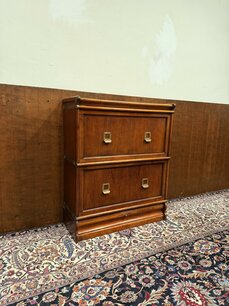
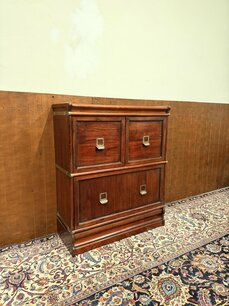
Around 1890, the German immigrant Otto H. L. Wernicke, who had moved to the United States, designed a modular sectional bookcase system. In 1892, he applied for a patent under the name Sectional Stock-Case. The design consisted of simple, stackable wooden cases with an opening, a central divider, and handles. The bookcase was especially popular among professionals who frequently relocated and owned large collections of documents, such as lawyers. Through advertisements in the North Western Law Reporter, the bookcase became known as the "barrister bookcase."
The first major customer was Judge Alexander M. Harrison, who commissioned an extensive bookcase at a low price. Demand soon grew for more luxurious versions featuring glass panels, decorative moldings, and plinths suitable for prestigious offices.
In 1899, The Wernicke Company was acquired by The Globe Company of Cincinnati. The newly formed company continued as The Globe-Wernicke Company, under the leadership of Wernicke and Henry C. Yeiser. Yeiser improved the design into the successful Elastic Book Case, for which patents were continuously filed to prevent competition. In 1903, Wernicke left the company.
In England, furniture maker Thomas Turner began licensed production in 1898. The bookcases became extremely popular during the Victorian and Edwardian eras. Even Vladimir Lenin ordered one for his study in 1908. Several versions were introduced, including the Standard, Universal Style, and Ideal Unit Bookcase models. Later, many designs were also produced in steel.
In 1955, the factory was acquired, and ten years later it was closed.
What Materials Does Globe Wernicke Use for Its Bookcases?
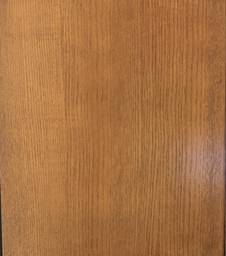
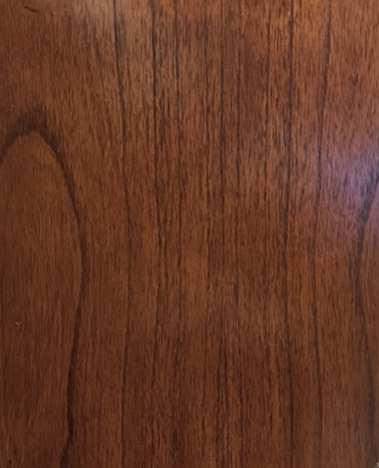
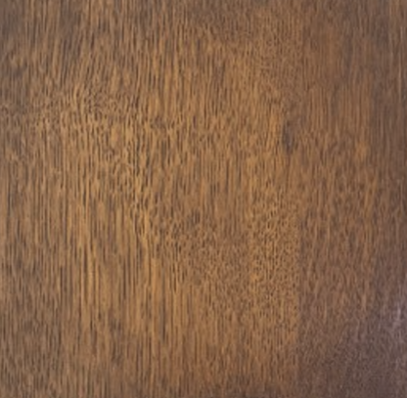
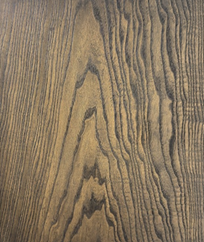
Globe Wernicke bookcases are highly durable storage solutions. Thanks to their modular and stackable system, they are suitable for virtually any space and application. Globe Wernicke cabinets are manufactured from high-quality woods such as oak, mahogany, mindi wood, and cedar wood, ensuring a long lifespan.
Because of their exceptional quality, these bookcases can last for generations and are therefore highly sought after by antique collectors.
How Do I Assemble a Globe Wernicke Bookcase?
Assembling a Globe Wernicke bookcase is very simple.
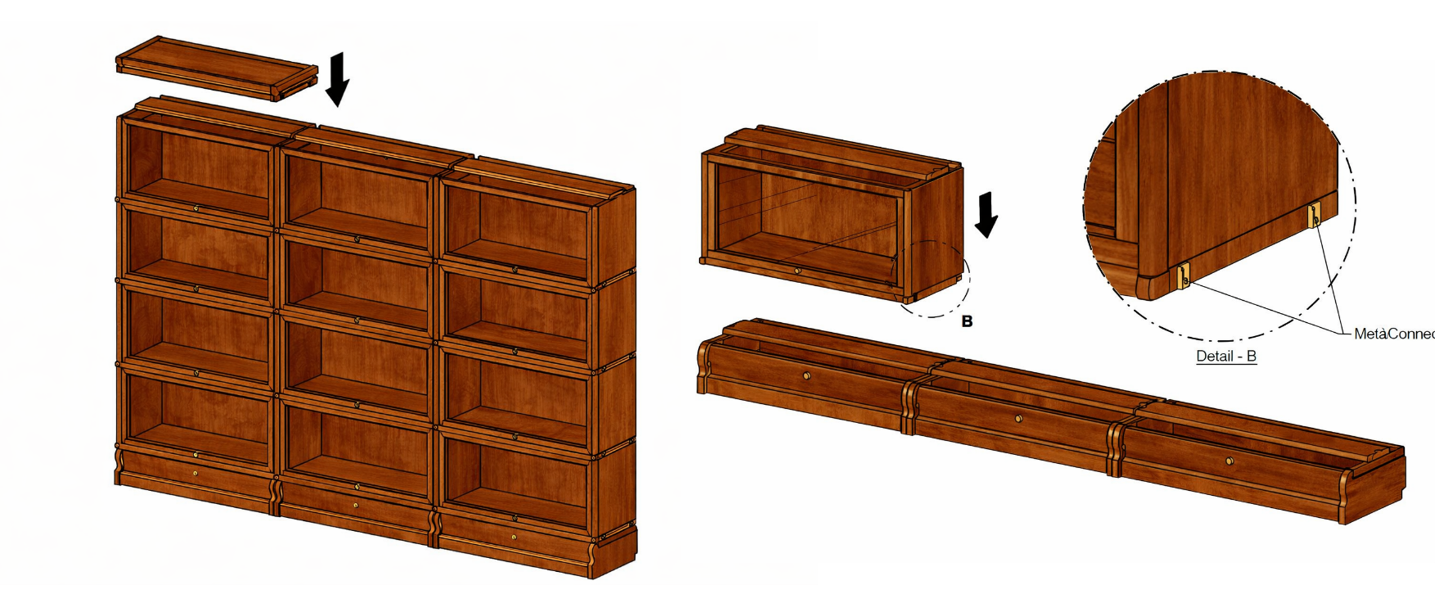
First, place the separate base or the Atlas module with the integrated base.
Next, use the adjustable feet underneath the base to ensure the cabinet stands level on the floor.
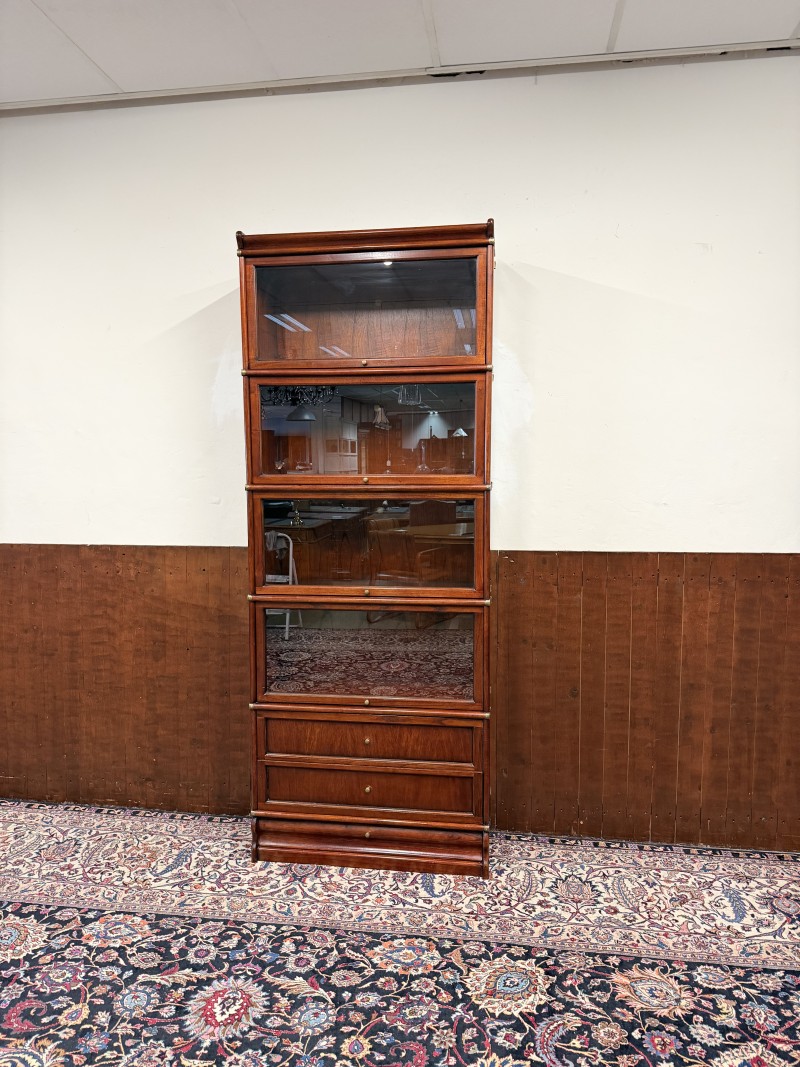
You can then stack the desired modules and finish the configuration with the closed top section.
Your first bookcase is now assembled. If you would like to place multiple bookcases side by side, you can use the metal connectors on the sides to hook the units together and securely connect them.
See the assembly drawings below for more detailed instructions on how to assemble a Globe Wernicke bookcase.
How Can You Recognize an Original Globe Wernicke Bookcase?
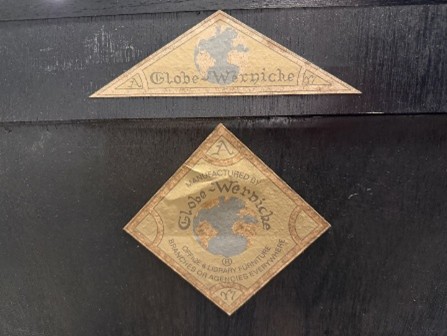
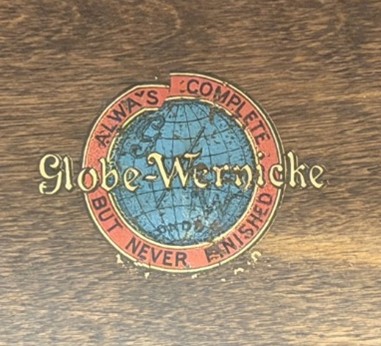
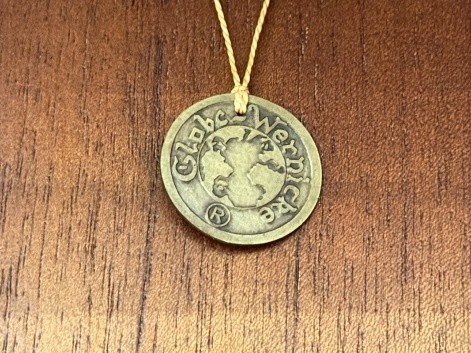
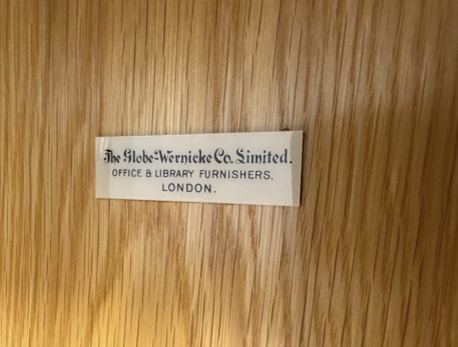
An original Globe Wernicke bookcase can be identified by the brand name, which is often displayed as a logo or label on the inside or outside of the cabinet. The age of the bookcase can often be determined by the style of the logo, as its design has changed several times throughout the years.
In addition to the logo, these bookcases can also be recognized by their craftsmanship, materials, and the precision with which the modular system fits together.
Which Globe Wernicke Bookcase Is Best for Me?
The ideal bookcase for your interior depends on the available space and its intended use.
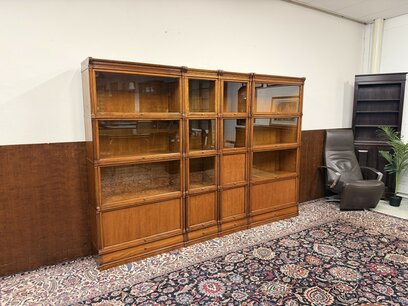
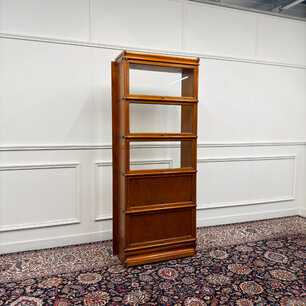
If you own many books or a large collection of items, modules with glass doors are often preferred because they allow your belongings to be beautifully displayed.
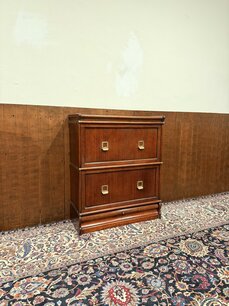
If you would like to use your Globe Wernicke bookcase in an office environment to store records, files, or important documents, closed modules are recommended, as they conceal the contents from immediate view.
The possibilities with Globe Wernicke are virtually endless. You can choose from a variety of dark and light wood species or different finishes such as black or white. There are also numerous modular elements available, including desks, wardrobes, and filing modules designed to hold hanging archive folders.
In short, the possibilities are limitless.
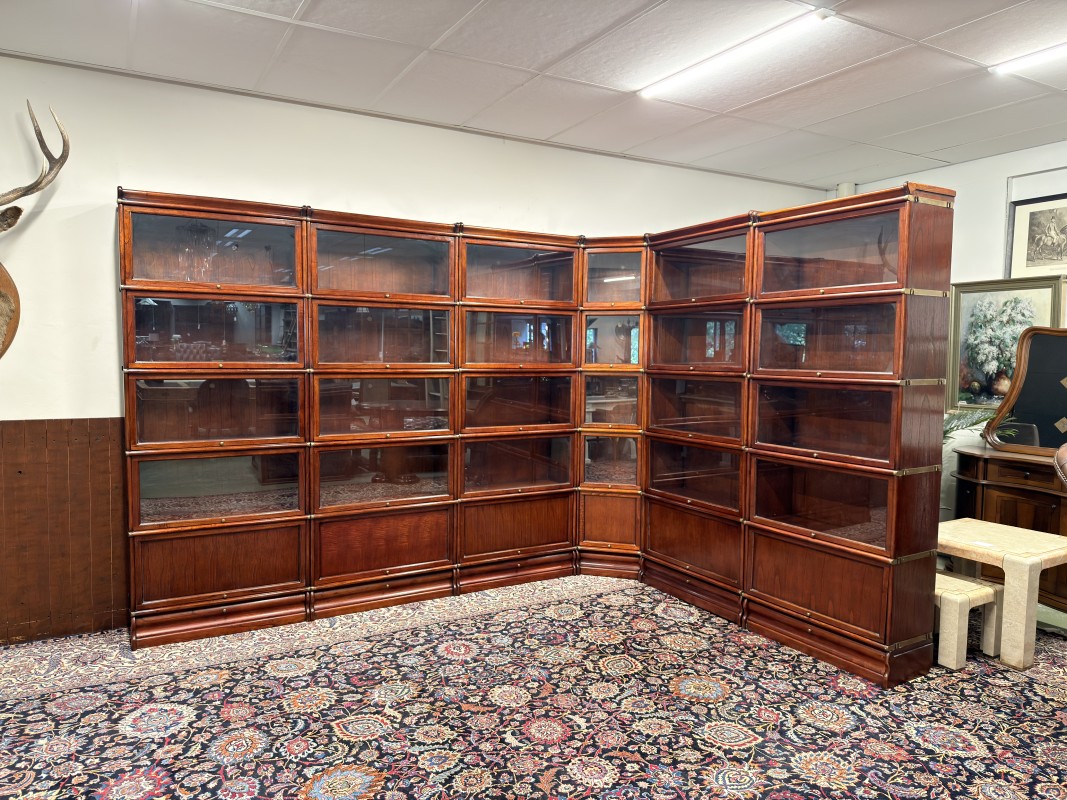
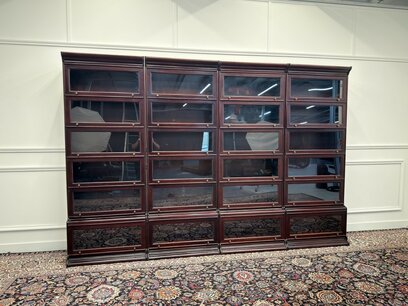
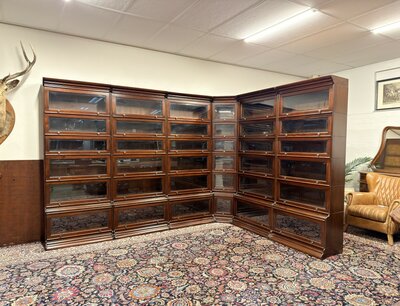
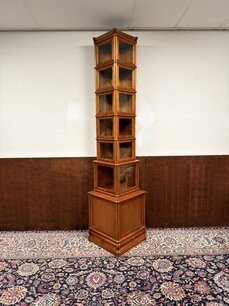
You can also opt for a corner module to create a Globe Wernicke corner bookcase or design a fully wall-to-wall arrangement.
Looking for Globe Wernicke Furniture?
Our store is located in the Netherlands, and we offer a large collection of original Globe Wernicke bookcases and office furniture. In addition, we also supply reproduction furniture made in the same style and quality, but without the Globe Wernicke brand name.
The antique Globe Wernicke bookcases in our collection are carefully inspected and restored where necessary. With many years of experience, we ensure that every antique Globe Wernicke bookcase is sold in excellent condition.
In addition to Globe Wernicke bookcases, we also offer a constantly changing selection of antique and pre-owned Globe Wernicke office furniture, including conference tables, chairs, bookcases, office cabinets, and various accessories such as library ladders.
Besides selling original pre-owned Globe Wernicke furniture, we are also an authorized Globe Wernicke dealer. This means that it is possible to configure your own bookcase based on the official catalog. Please contact us to discuss the available options.
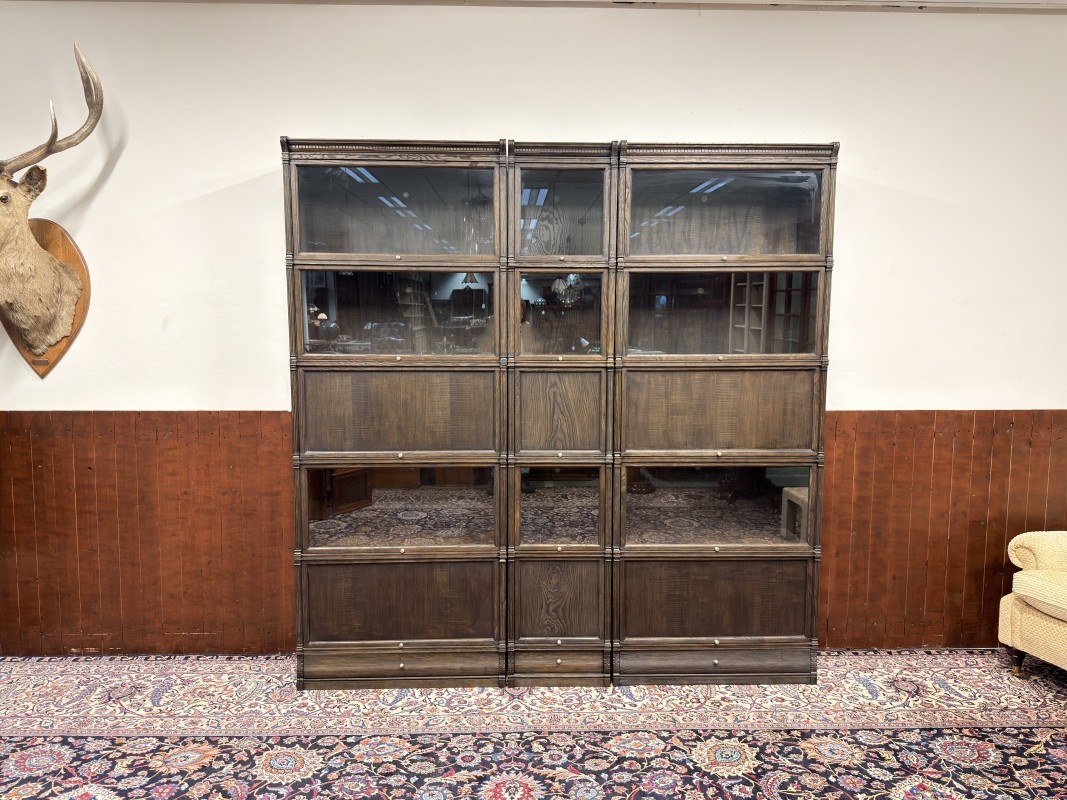
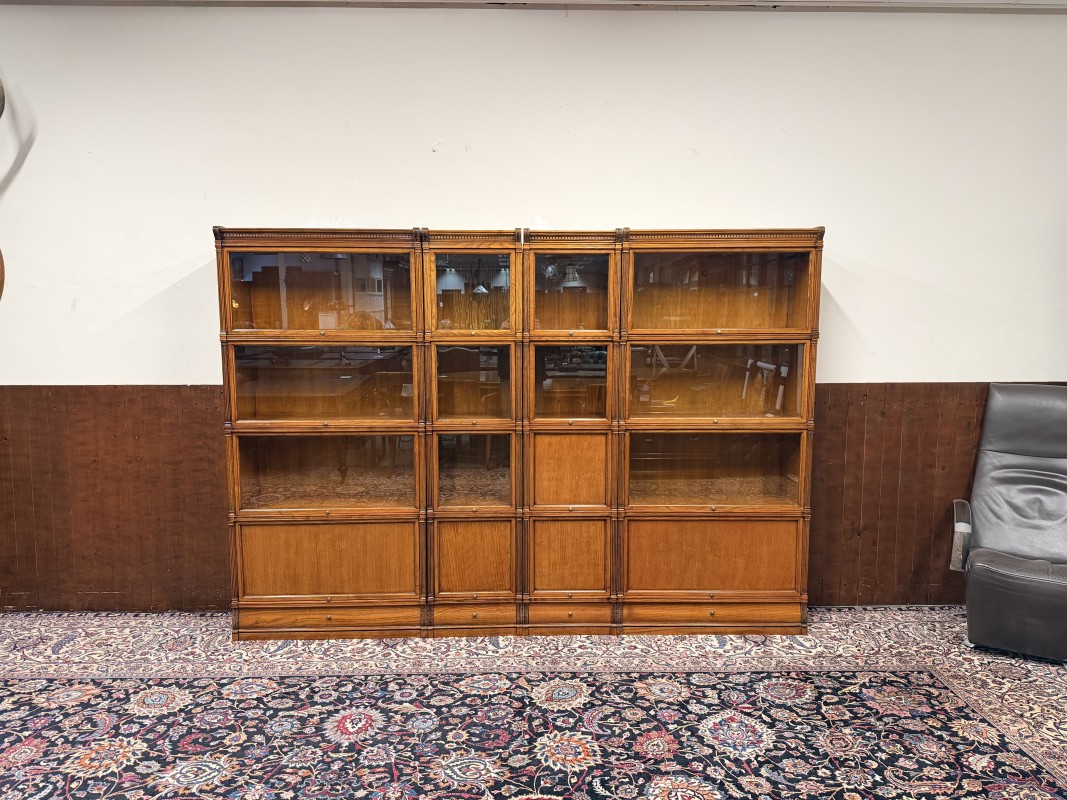
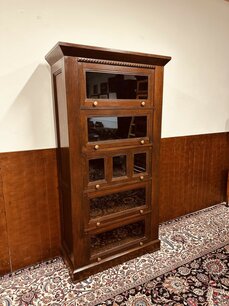
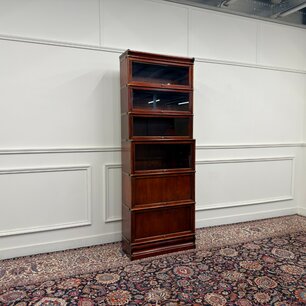
See the photos below for a selection of our extensive collection.